
Wabi Sabi Living Room Ideas: Preview the Look on Yours
A wabi sabi living room is calm, earthy and a little rough on purpose: soft limewash walls, low linen furniture, raw wood and handmade ceramics. Here is how to build that look, and how to preview it on a photo of your own living room before you repaint or buy anything.

- Free within usage limits
- No account needed
- Android app
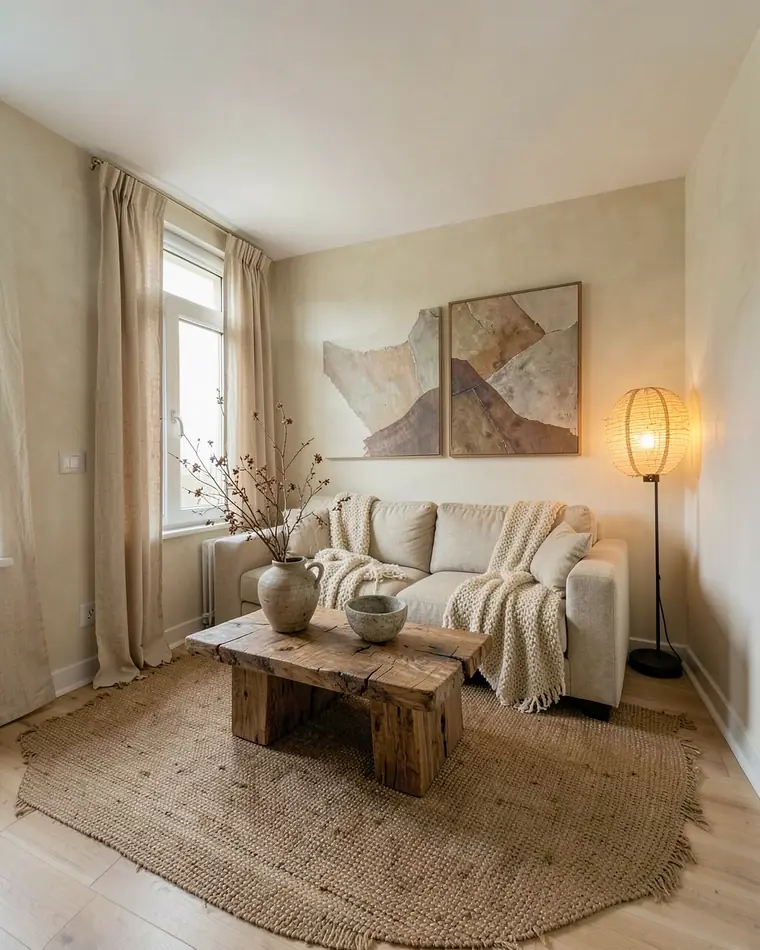
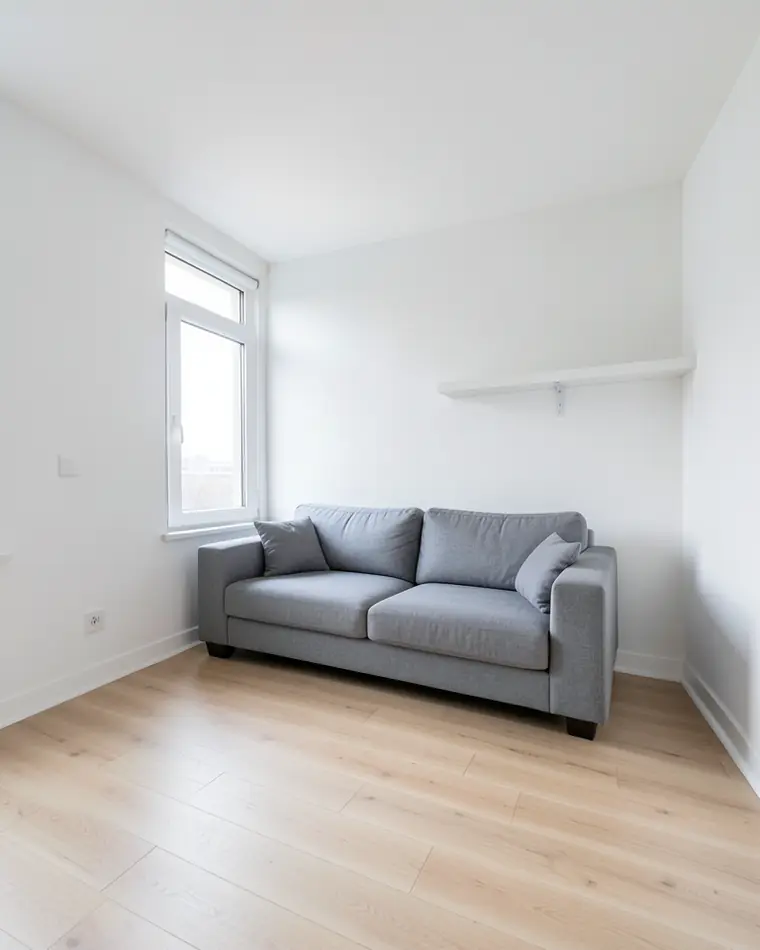
Wabi sabi living room: what defines the look
Think imperfect, quiet and earthy. On this page, a wabi sabi living room means walls with a soft, uneven finish, a palette of sand, clay and stone, low furniture in natural fabrics, and a few handmade objects that show the maker's hand. Nothing looks brand new, and nothing is polished to a shine.
Three habits do most of the work. Surfaces keep their texture, so plaster, raw wood and rough stone stay visible instead of disappearing under gloss. Objects are handmade or irregular, such as a bowl with an uneven glaze or a vase with a lopsided neck. And the room stays uncluttered, with a bare branch or one large artwork doing the job that a dozen accessories would do elsewhere.
The three designs below show three moods, from sage limewash with raw wood through warm clay with stone to soft gray with charred wood. If you want a lighter, more Nordic version, see Japandi living room ideas. For a plainer, softer palette, see beige living room ideas.
Three wabi sabi looks for one living room
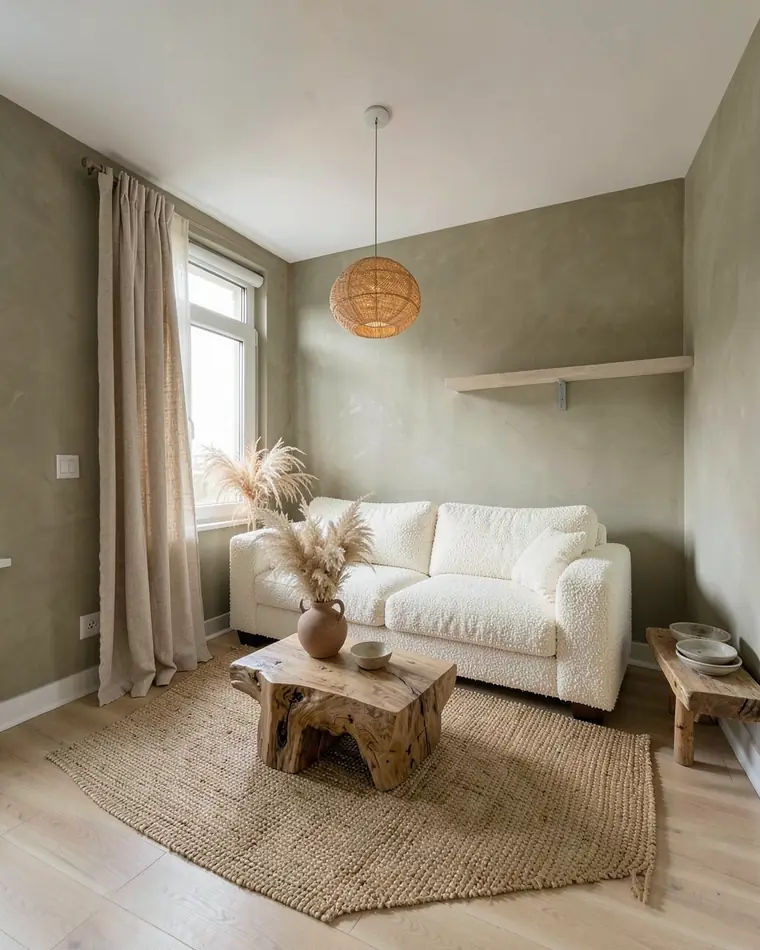
Limewash and raw wood
Sage limewash walls, a low cream bouclé sofa, a raw wood slab coffee table, a woven natural-fiber rug and a clay vase with dried pampas. A small bench of ceramic bowls and a woven pendant lamp finish the look.
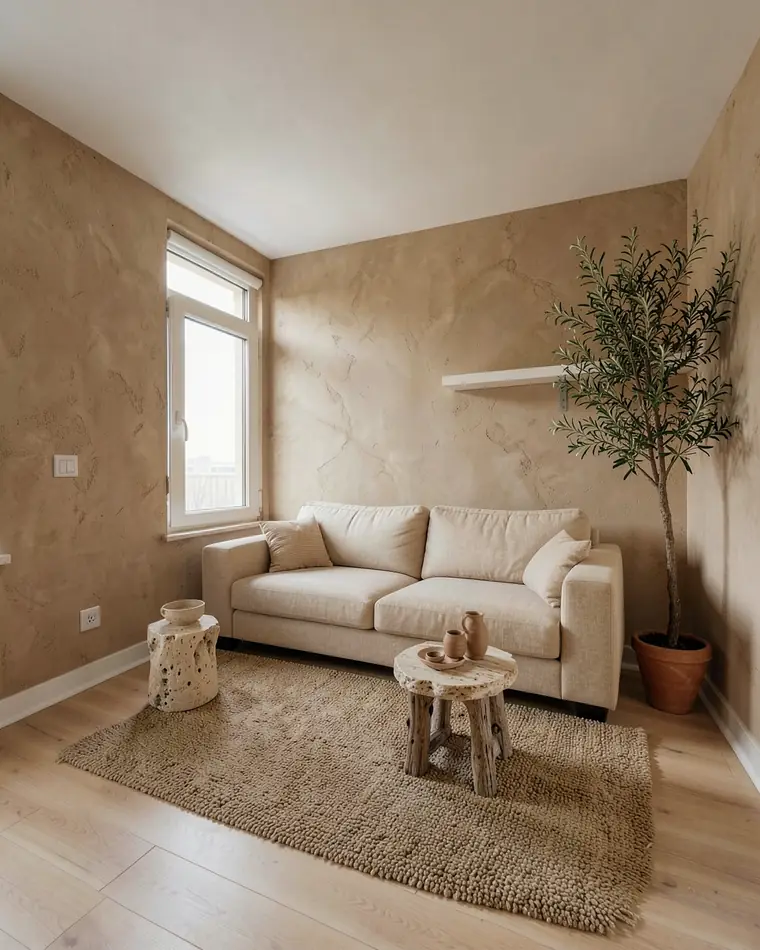
Earth tones and stone
Clay beige plaster walls, a low sand linen sofa, a stone side table, an old wooden stool and an olive tree in a terracotta pot on a chunky woven rug. The warmest of the three, and the stone keeps it from feeling soft all over.
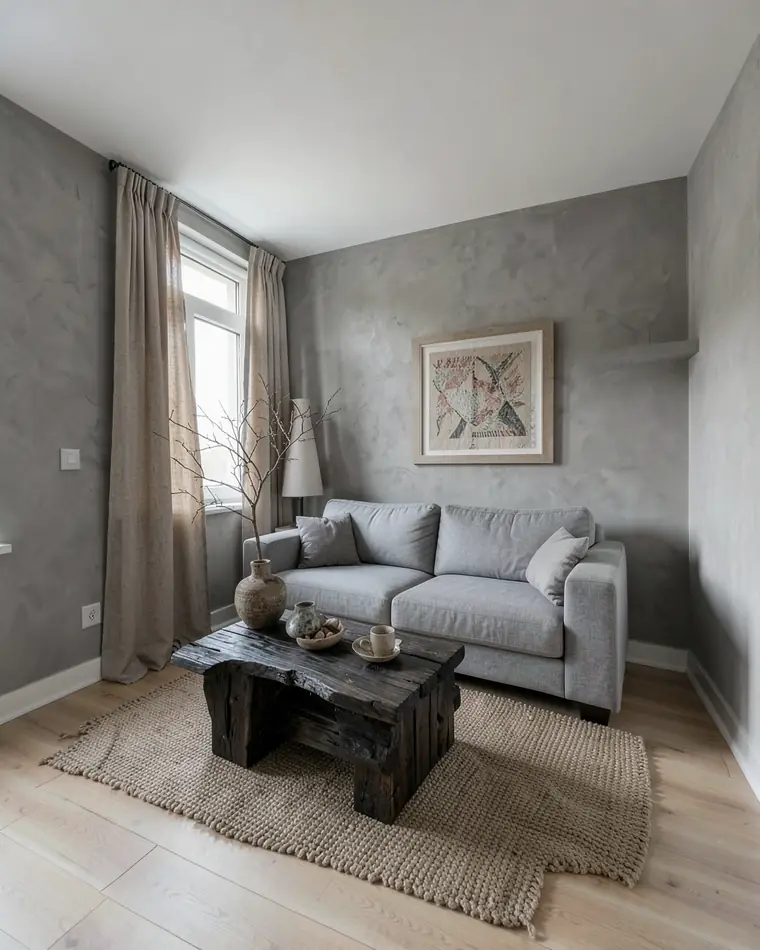
Soft gray and charred wood
Soft gray plaster walls, a stone gray linen sofa, a charred dark wood coffee table, a woven natural-fiber rug and a bare branch in a tall vase. The calmest and darkest of the three, for anyone who finds beige too warm.
Which colors and materials suit a wabi sabi living room?
Start with the walls, because the finish sets the mood. For a soft, cloudy surface, look at limewash or plaster-effect paint in greige, sand or clay beige rather than smooth flat paint. Keep the sofa, curtains and rug in the same family and let texture, not color, create the contrast.
| Element | Pale and soft | Deep and earthy |
|---|---|---|
| Walls | Warm greige limewash | Clay beige plaster |
| Wood | Raw oak slab | Charred dark wood |
| Sofa | Cream bouclé or oatmeal linen | Stone gray linen |
| Rug | Seagrass or undyed jute | Hand-woven wool |
| Objects | Clay vase with dried pampas | Travertine side table, terracotta pot |
Natural fabrics matter more than the exact shade. Linen curtains that let daylight through, a wool throw and a woven rug layer three textures without adding a single pattern. If you want a print, keep it to one large abstract artwork in earth tones.
Light the room warmly. A paper lantern, a rough ceramic lamp and a floor lamp with a warm bulb make soft pools of light in the evening, and we find that softer light suits textured walls better than one bright fixture in the middle of the ceiling.
How to keep a wabi sabi living room cozy, not bare
Rough and sparse can tip into cold. Add warmth with things you can touch: a thick rug, a wool throw over the arm of the sofa, and an old wooden stool that doubles as a side table. Dried branches, an olive tree in a terracotta pot or a bowl of river stones bring in natural shapes without clutter.
Choose fewer pieces with more character. One chunky wooden table looks better here than three matching side tables, and a bench holding a few ceramic bowls can replace a whole shelf of accessories.
Our rule of thumb for telling this style from Japandi: Japandi is lighter and tidier, while wabi sabi accepts cloudy walls, knotty wood and glaze that is not quite even. Many rooms borrow from both, so choose by how much visible texture you want to live with.
How to photograph your living room for a wabi sabi preview
Stand far enough back that the sofa wall, the window and the floor in front of the sofa are all in the frame. Hold the phone level at chest height so the door frames stay vertical. Take the photo in daylight with the curtains open and the lamps off, so the wall color is easier to judge.
Clear the coffee table and the shelves first, so the room reads clearly in the photo. This style depends on leaving space around every object. If the room has a sloped ceiling or exposed beams, step back until the whole ceiling line is visible, because beams and rough ceilings suit the look well.
Wabi sabi in zabudowa.arch: what the app does and what it does not
The app is zabudowa.arch, for Android. You photograph the living room, or choose a picture from the gallery, and about a minute later designs A, B and C appear, each with a name and a short description. Drag the slider to see your own room under each design, then save the result or send it to someone.
Wabi sabi has no ready style of its own in the app. It offers Scandinavian, Japandi, modern classic, warm minimal, industrial, mid-century, boho and coastal, and you can also describe any style in your own words. For this look, try something like “limewash walls, low linen sofa, raw oak coffee table, paper lantern, jute rug”.
What the app leaves alone matters here. Windows, doors, floor, ceiling and layout stay as in your photo, so a dark floor stays dark under the rough linen sofa, and the app does not plan layouts or dimensions. What it restyles in a full change is the furniture, textiles, decorations, lamps, curtains and wall color. Treat the plaster finish in the pictures as a visual idea, not a specification for a material or a technique. The designs are AI images for inspiration, and colors and textures look different on a real wall, so get a sample before you buy. More about the app is on the free AI living room design app page.
Try a wabi sabi look on your own living room
Photograph the room from far enough back to include the sofa wall, the window and the floor in front of the sofa, with the phone level, the curtains open and the lamps off. With a sloped ceiling or beams, step back until the whole ceiling line is in the frame.
Describe the look in your own words, for example “limewash walls, low linen sofa, raw oak coffee table, paper lantern, jute rug”. For a gentler first step, start from the warm minimal or Japandi style and see what you would make rougher.
Compare designs A, B and C with the slider and save your favorite. Then test the idea in the real room: paint a limewash or plaster sample on one wall and look at it at different hours of the day before you repaint.
Questions and answers
What is a wabi sabi living room?
Here it means a calm, earthy living room with soft textured walls, a palette of sand, clay and stone, low furniture in natural fabrics, raw wood and handmade objects with visible imperfections. If the room feels quiet, slightly rough and unfussy, you are close.
What colors suit a wabi sabi living room?
Sand, greige, clay beige, stone gray and cream for the large surfaces, with raw or charred wood for contrast and olive green or terracotta in small doses. Keep the colors close together and let texture do the contrasting.
How do I get the plaster wall look?
Look for limewash or plaster-effect paint and test a patch on your own wall in your own light. Ask a paint supplier or a decorator which product and technique give the cloudy finish you like. The pictures in the app show the idea, not a specification for a product or a method.
How is wabi sabi different from Japandi?
Our rule of thumb: Japandi is lighter and tidier, while wabi sabi is rougher and earthier, with more visible texture and irregular handmade pieces. Many living rooms borrow from both, and the lighter Japandi palette is an easy place to start.
Can I see a wabi sabi look on my own living room photo?
Yes. In zabudowa.arch you take a photo, describe the look in your own words and get three designs after about a minute. The furniture, textiles, decorations, lamps, curtains and wall color change, while windows, doors, floor, ceiling and layout stay as in your photo.
Related ideas
 Living roomSofa, walls, curtains, lighting
 Japandi living roomPalette, wood and furniture for a calm look
 Modern living roomPalette, materials and small-space ideas
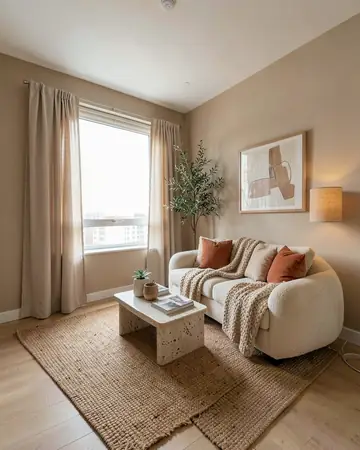 Beige living roomSand, greige or cream with texture and accents
More guides
Free AI interior design app: how it worksHouse mode: free AI exterior design for your house