
Japandi Living Room Ideas: Try the Style on Your Own Room
A Japandi living room is calm, low and natural: light wood, soft linen, a muted palette and very few objects. Here is how to build that look, and how to preview it on a photo of your own living room before you buy anything.

- Free within usage limits
- No account needed
- Android app
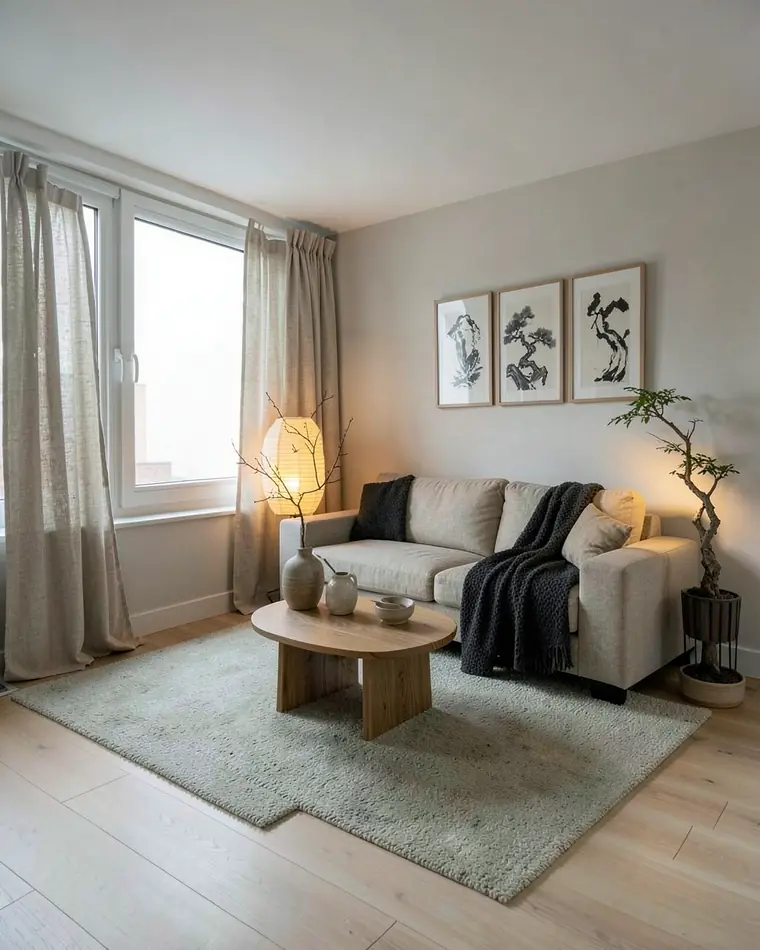
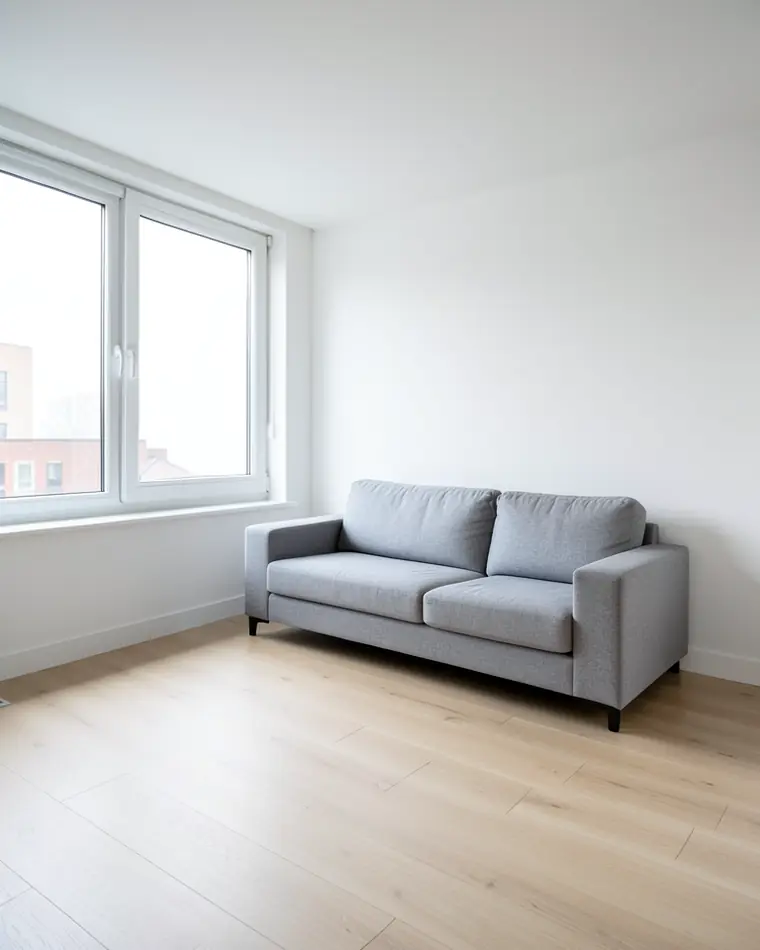
Japandi living room ideas: what defines the look
Think low, light and quiet. A Japandi living room usually has furniture that sits close to the floor, wood in pale or mid tones, warm neutral colors and a small number of well-chosen objects. Nothing shouts, and every piece has space around it.
Three habits do most of the work. Furniture stays low, so a sofa with a short back, a round coffee table and a media cabinet at knee height leave the walls open. Surfaces stay natural, with wood, linen, wool, paper and ceramic in place of gloss and chrome. And the room keeps empty space on purpose, so a single branch in a stoneware vase can be the whole decoration.
The three designs below show three moods. Light oak calm keeps everything pale. Walnut warm adds darker wood and a rust accent. Wabi plaster brings in a textured clay-plaster wall and rougher, handmade objects. If you prefer cleaner lines and graphite tones, see modern living room ideas.
Three Japandi looks for one living room
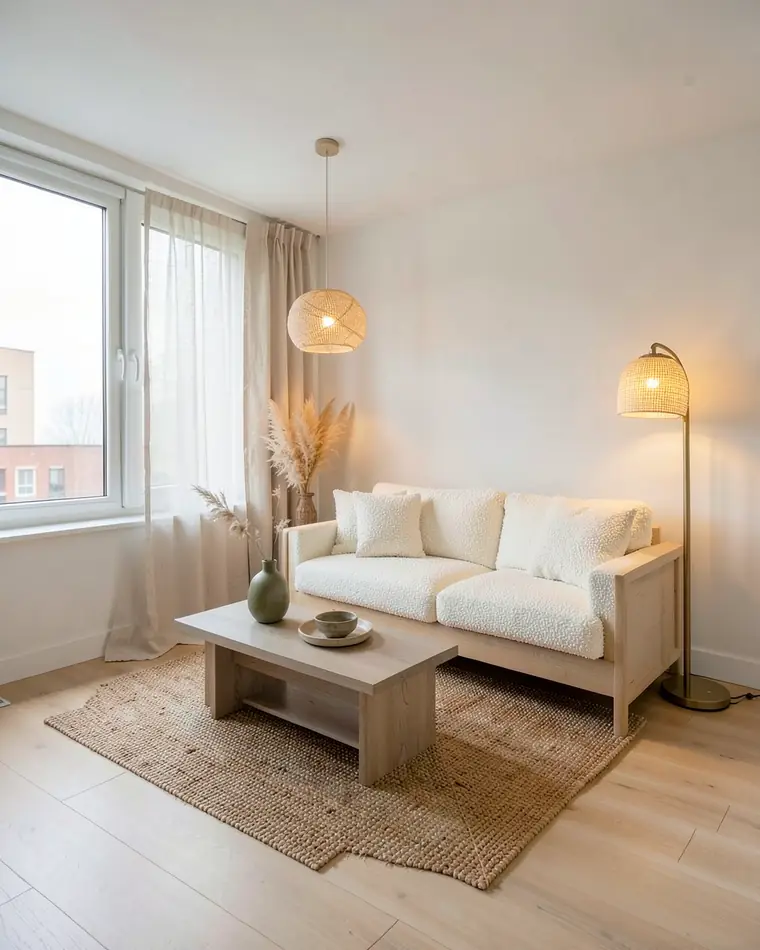
Light oak calm
A pale-oak-framed sofa with off-white bouclé cushions, a low light-wood coffee table, a woven jute rug and a woven rattan pendant lamp against warm white walls. The airiest of the three, with an olive-green vase as the only strong color.
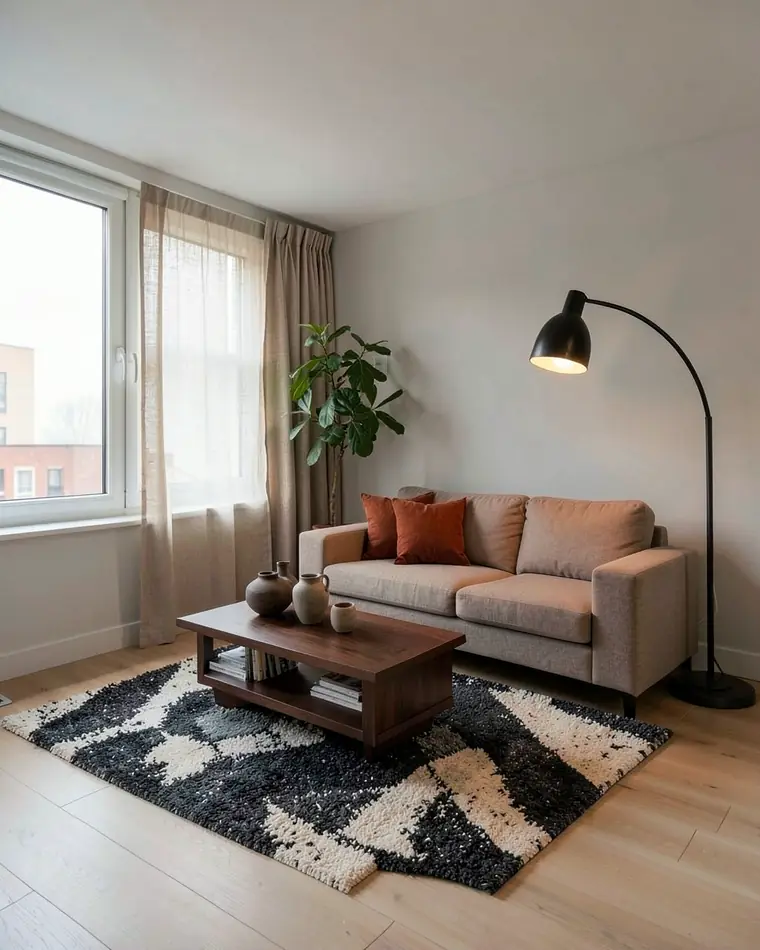
Walnut warm
A taupe sofa, a dark walnut coffee table, a charcoal-and-cream rug, a black metal arc floor lamp and rust cushions on greige walls. The most grounded of the three, and the dark wood keeps the pale palette from floating.
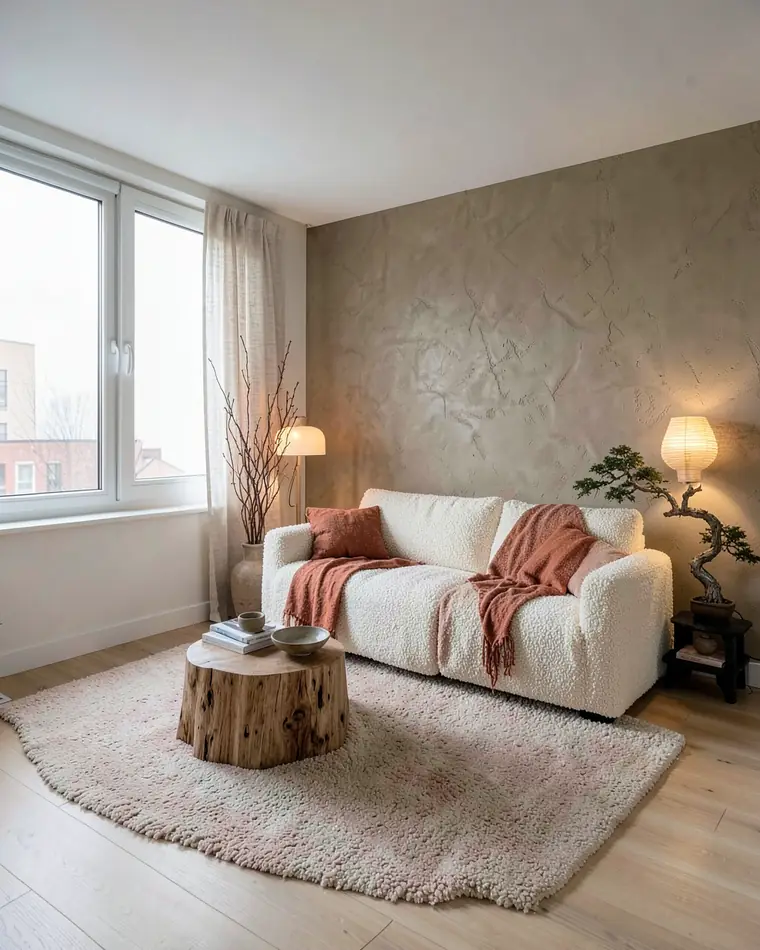
Wabi plaster
A clay-plaster accent wall, a low off-white bouclé sofa, a raw wooden stump as a coffee table, a thick shaggy cream rug and a paper lantern lamp beside a bonsai-like tree. The roughest, most handmade look, for anyone who finds smooth surfaces too polished.
Japandi colors, wood and furniture to start with
Begin with the walls and the floor, because they set the tone for everything else. Warm white or soft greige on the walls makes a quiet background. Add one dark accent, such as charcoal in a throw or a black metal lamp, and one wood tone, then repeat each of them in two or three places.
| Element | Pale and airy | Warm and grounded |
|---|---|---|
| Walls | Warm white | Greige |
| Wood | Pale oak or ash | Dark walnut |
| Sofa | Oatmeal linen or off-white bouclé | Taupe linen |
| Rug | Jute or undyed wool | Charcoal and cream wool |
| Accent | Olive-green stoneware | Rust cushion |
Textures carry the room when the colors are quiet. Linen curtains, a wool rug and a woven jute mat give the eye something to read, so layer two or three of them. Keep patterns out, or limit them to one ink-wash print on the wall.
Lighting deserves as much thought as furniture. A paper lantern, a ceramic table lamp and a floor lamp with a warm bulb create pools of light in the evening and usually suit this style better than one bright fixture in the middle of the ceiling.
How to keep a Japandi living room warm and not bare
A pale, sparse room can start to feel like a showroom. Add warmth with materials you can touch: a thick rug, a wool throw over the arm of the sofa, and a plant with an irregular shape, such as a small tree in a clay pot. A bonsai-like plant or a branch in a vase gives the room a living outline without clutter.
Choose fewer, better objects. Group a few items on a tray on the coffee table and leave the shelf below half empty. A piece that has no use and no particular beauty probably does not belong in this room.
Look at the floor too. If it is dark or has a strong orange tone, a large pale rug and pale curtains bring back the light feel of the style.
How to photograph your living room for a Japandi preview
Stand far enough back that the sofa wall, the window and the floor in front of the sofa are all in the frame. Japandi furniture is low, so a phone held at chest height shows the line of the furniture and plenty of floor. Keep the phone level so the door frames stay vertical.
Take the photo in daylight, with the curtains open and the lamps off. Clear the coffee table and the shelves first, so the designs start from a calm scene. If the ceiling slopes or a roof window sits above the sofa, step back until the whole ceiling line is visible.
Japandi in zabudowa.arch: what changes in your photo and what stays
Japandi is one of the styles in zabudowa.arch, an Android app, alongside Scandinavian, modern classic, warm minimal, industrial, mid-century, boho and coastal. Photograph your living room with the camera or pick a picture from your gallery, choose Japandi, and after about a minute you get three designs, A, B and C, each with a name and a description.
In a full style change the furniture, textiles, decorations, lamps, curtains and wall color change. If you have your own idea, describe it in words, for example “low linen sofa, oak coffee table, paper lantern, greige walls”. A slider compares each design with your photo, and you can save it to your gallery or share it.
The room itself stays put. Windows, doors, the floor, the ceiling and the layout are the same as in your photo, so a dark floor stays dark, and the app does not plan layouts or dimensions. The designs are AI images for inspiration, and wood tones, paint and fabric can look different in real life, so get a sample before you buy. More about the app is on the free AI living room design app page.
Try a Japandi look on your own living room
Photograph the room from far enough back to include the sofa wall, the window and the floor in front of the sofa, with the phone level, the curtains open and the coffee table cleared. If the ceiling slopes, step back until the whole ceiling line is visible.
Choose the Japandi style, or describe your own version, such as “low linen sofa, oak coffee table, paper lantern, greige walls”. For a smaller step, pick up to two changes, for example wall color and curtains.
Compare designs A, B and C with the slider, save your favorite and share it. If you like a wood tone or a wall color, hold a real sample next to your own floor before you buy, because AI colors can differ from real ones.
Questions and answers
What makes a living room Japandi?
Low furniture, light to mid-tone wood, a muted palette of warm neutrals and natural textures such as linen, wool, paper and ceramic. Add a few well-chosen objects and leave some surfaces empty. If the room looks calm and slightly sparse, you are close.
What colors and wood suit a Japandi living room?
Warm white, greige, oatmeal and stone for the large surfaces, with charcoal or black in small doses and one accent such as olive green or rust. Pale oak or ash keeps the room airy, and dark walnut grounds it. Repeat one or two wood tones instead of mixing many.
How do I make a Japandi living room feel cozy?
Layer textures: a thick wool rug, a linen throw, curtains that let daylight through and lamps with warm bulbs at different heights. A plant or a branch in a ceramic vase adds a living shape without adding clutter.
Can I see a Japandi look on my own living room photo?
Yes. In zabudowa.arch you take a photo, choose the Japandi style and get three designs after about a minute. The furniture, textiles, decorations, lamps, curtains and wall color change, while the windows, doors, floor, ceiling and layout stay as in your photo.
Does Japandi work with a dark floor?
It can. In zabudowa.arch the floor stays as in your photo, so you see how a Japandi sofa and rug sit on your own floor before you decide. In a real room, a large pale rug is a common way to lighten a dark floor.
Related ideas
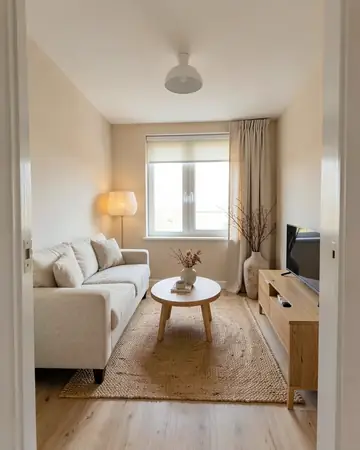 Living roomSofa, walls, curtains, lighting
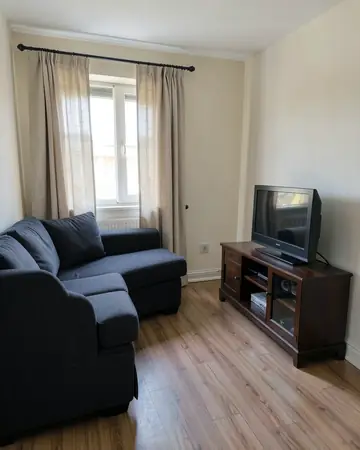 Modern living roomPalette, materials and small-space ideas
More guides
Free AI interior design app: how it worksHouse mode: free AI exterior design for your house