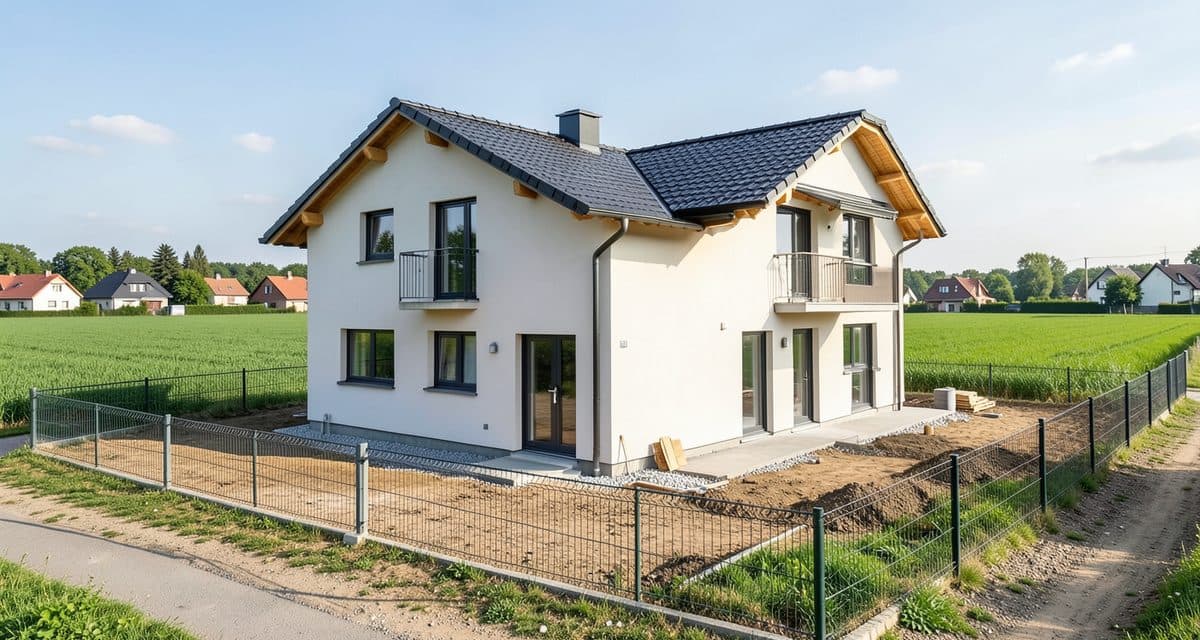
What converting farmland to building land means
Legal status as of 1.11.2026
This article covers the Act on the protection of agricultural and forest land (*ugrl*, consolidated text Dz.U. 2024 poz. 82, amended among others by Dz.U. 2026 poz. 781) and the Act on spatial planning and development (*upzp*, consolidated text Dz.U. 2026 poz. 538). The 2026 changes described here concern the deadline for consent to a change of land use and the date from which a zoning conditions decision requires a general plan. This is not legal advice, so confirm the soil class and the plan for your plot with the Polish authorities.
Converting farmland to building land in Poland takes two separate steps. The first is changing the land use. Where it needs consent, the change is made in a local zoning plan (*miejscowy plan zagospodarowania przestrzennego*, MPZP) drawn up under the spatial planning rules (art. 7 ust. 1 ugrl). The second is a decision to remove the land from agricultural production. After it, as a rule, you pay a one-off payment plus an annual fee equal to 10% of that payment, for 10 years in the case of permanent removal (art. 4 pkt 12 i 13 ugrl). You obtain the removal decision before the building permit or the construction notification (art. 11 ust. 4 ugrl).
The act treats as agricultural land, among others, land recorded in the land register as agricultural use (art. 2 ust. 1 pkt 1 ugrl). Allocating land to non-agricultural or non-forest purposes means setting a use other than farming (art. 4 pkt 6 ugrl), and removal from production means starting that other use (art. 4 pkt 11 ugrl). A house built on arable land is exactly such a use.
Not every piece of farmland goes through both steps. The scope depends on the soil class (*klasa bonitacyjna*) and, for classes IV–VI, on whether the soil is mineral or organic. The exact split is in the section on soil classes. If your plot is recorded as a homestead plot (*siedliskowa*) or forest land, start with our article on building on agricultural and forest land in Poland.
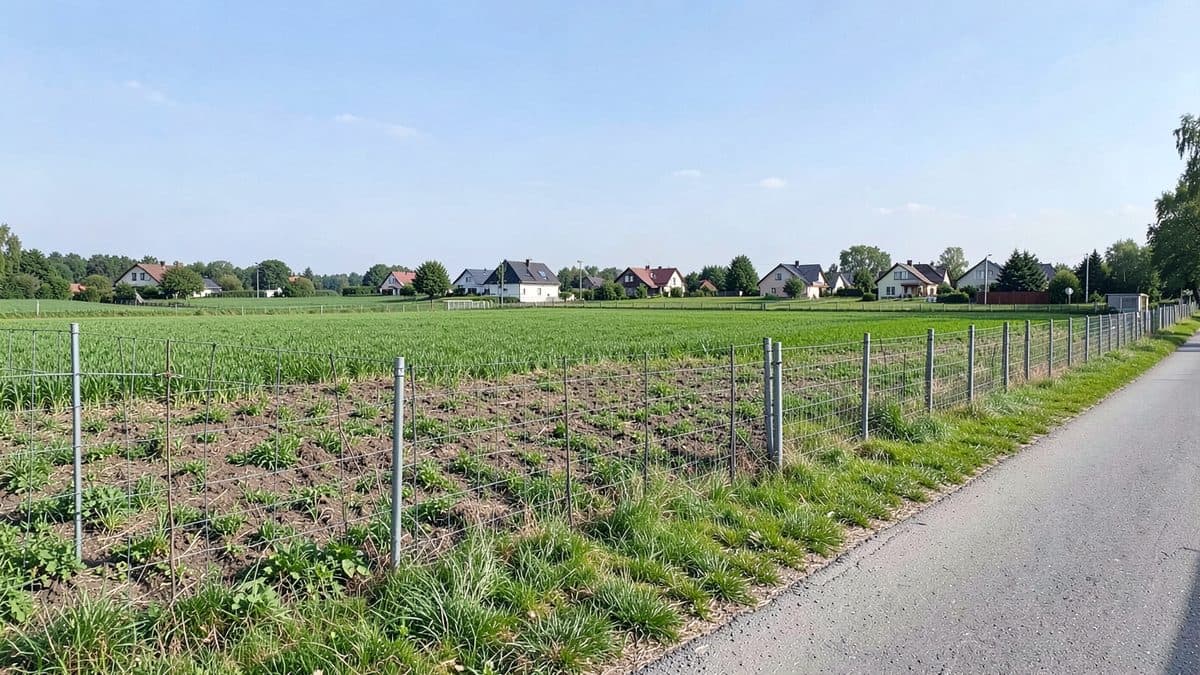
The zoning plan comes first
Start with what the plan says about your plot today. If the local plan (MPZP) already designates it for housing, the change of land use is done. What remains is the removal-from-production decision, provided it applies to the soil class of your plot (art. 11 ust. 1 ugrl). You can check the designation with the municipality (*gmina*) or in the tool described below.
Where there is no local plan, the fallback is a zoning conditions decision (*decyzja o warunkach zabudowy*, WZ). The upzp allows it only if the area does not need consent to change agricultural and forest land to non-agricultural and non-forest purposes, or is covered by consent obtained when plans that have since lost force were drawn up (art. 61 ust. 1 pkt 4 upzp). Another condition is that the area lies within an infill development area (*obszar uzupełnienia zabudowy*, art. 61 ust. 1 pkt 1a upzp), with exceptions in art. 61 ust. 1a upzp. For agricultural land of classes I–III outside such an area, art. 7 ust. 2 ugrl requires the minister's consent, so ask the authority whether a WZ decision is possible at all.
From 1 September 2026 there is an additional condition tied to the general plan (*plan ogólny*). A WZ decision on an application filed from that date can be issued if a general plan has entered into force in the municipality (art. 59 ust. 3 of the amending act to the upzp, Dz.U. 2023 poz. 1688, as worded by Dz.U. 2025 poz. 1543 and Dz.U. 2026 poz. 781). In the general plan the municipality can define infill development areas (art. 13a ust. 4 pkt 2 lit. a upzp). Both the condition in art. 61 ust. 1 pkt 1a upzp and the exemption of classes I–III from the minister's consent (art. 7 ust. 2a ugrl) depend on them.
Existing local plans keep their force until new plans enter into force in the given area (art. 67 ust. 1 of the amending act to the upzp). What exactly a missing general plan changes in your municipality is covered in our article on zoning and the general plan after September 2026. The rules for the WZ decision itself are in the zoning conditions decision guide.
Soil classes and who must consent
Consent to a change of land use applies only to part of agricultural land. Agricultural land of classes I–III requires the consent of the minister responsible for rural development (art. 7 ust. 2 pkt 1 ugrl). No consent is needed when such land lies in an infill development area within the meaning of the spatial planning rules (art. 7 ust. 2a ugrl).
You do not apply for the consent yourself. The application is filed by the head of the municipality (*wójt*, *burmistrz* or city president), who is the party to the proceedings (art. 7 ust. 3 i 3a ugrl). The voivodeship marshal adds an opinion and passes the application to the minister within 30 days of the municipality filing it (art. 7 ust. 4 ugrl). The application contains a justification of the need for the change and a list of land areas with their soil classes (art. 10 ust. 1 ugrl).
| Land | Consent to change of land use (art. 7 ust. 2 ugrl) | Removal-from-production decision (art. 11 ust. 1 ugrl) |
|---|---|---|
| Agricultural land, classes I–III | yes, the minister's consent; not required in an infill development area | yes |
| Agricultural land, classes IV–VI, organic soils | no, ust. 2 pkt 1 covers only classes I–III | yes |
| Agricultural land, classes IV–VI, mineral soils | no, ust. 2 pkt 1 covers only classes I–III | no, these soils are not listed in ust. 1 |
Under the ugrl, organic soils are peat and muck soils formed with organic matter in conditions of excess moisture. Other soils are mineral (art. 4 pkt 8 i 9 ugrl). Check the class and type of soil for your plot in the land register by asking the county office (*starostwo*) or the municipal office. The rest of the procedure depends on these two facts.
The ugrl requires that wasteland be allocated to non-agricultural and non-forest purposes first and, if there is none, other land with the lowest production suitability (art. 6 ust. 1 ugrl). The municipality therefore has to justify the need for the change in its application for consent (art. 10 ust. 1 pkt 1 ugrl). Before buying a class I–III plot, ask the municipality whether its plan provides for development there at all.
The deadline for consent changed in 2026. The consenting authority has 120 days from receiving the application, and if the authority neither grants nor refuses consent within that time, this counts as consent (art. 7 ust. 3 ugrl). The new wording applies from 1 September 2026; cases started and not finished before that date are handled under the previous wording of this provision (art. 61a of the amending act to the upzp, added by Dz.U. 2026 poz. 781).
Fees for converting farmland in Poland
The fee under the ugrl has two items, a one-off payment for permanent removal of the land from production and an annual fee. The annual fee is 10% of the payment, and for permanent removal you pay it for 10 years (art. 4 pkt 12 i 13 ugrl). The obligation to pay lies with the person who obtained the removal permit, from the day the land is actually removed from production (art. 12 ust. 1 ugrl). It does not apply to removal for housing of up to 0.05 ha in the case of a single-family house (art. 12a ugrl).
The amounts are written into the act. The table gives the payment for removing 1 ha of agricultural land by class (art. 12 ust. 7 ugrl). For classes IV–VI it applies only to organic soils.
| Class | Arable land and orchards | Permanent meadows and pastures |
|---|---|---|
| I | 437 175 | 437 175 |
| II | 378 885 | 361 398 |
| III | IIIa: 320 595; IIIb: 262 305 | 291 450 |
| IV | IVa: 204 015; IVb: 145 725 | 174 870 |
| V | 116 580 | meadows: 145 725; pastures: 116 580 |
| VI | 87 435 | 87 435 |
The amounts are per 1 ha, so convert them to the area you remove from production and confirm the result with the county office. The value of the land, set at market prices in the locality on the day of actual removal, is deducted from the payment (art. 12 ust. 6 ugrl). You pay the payment within 60 days of the day the decision became final, and the annual fee for a given year by 30 June of that year (art. 12 ust. 13 i 14 ugrl).
The table has no amounts for classes IV–VI on mineral soils, because art. 11 ust. 1 ugrl does not list them among land that needs a removal decision. Ask the county office how the register classifies your plot. The removal decision can also oblige you to strip and reuse the humus layer of the soil (art. 14 ust. 1 ugrl), which is worth including in your earthworks budget.
A change of land use and tax are separate matters. Agricultural tax covers land classified in the land and buildings register as agricultural use, except land taken up for business activity other than farming (art. 1 of the Act on agricultural tax). Agricultural land is not subject to property tax, except land used for business activity (art. 2 ust. 2 of the Act on local taxes and fees). The first provision refers to the classification in the register, not to the entry in the plan. From when the tax assessment on your plot changes, the municipal office will explain.
Steps and timing
The order of actions looks like this.
- Find the use, class and type of soil (mineral or organic) in the land register. They decide whether the minister's consent and a removal decision are needed.
- Ask the municipality what the local plan (MPZP) says. If there is none, ask whether the municipality has a general plan and whether the plot lies in an infill development area.
- If the plan does not allow development, ask the municipality whether it plans to change the plan and how to submit a request. The head of the municipality applies for consent for classes I–III (art. 7 ust. 3 ugrl).
- Once the plan is adopted, ask the county head (*starosta*) for the decision to remove the land from production. The county head is the competent authority in agricultural land protection matters (art. 5 ust. 1 ugrl).
- Pay the payment and the annual fees by the deadlines in the decision and the act (art. 12 ust. 13 i 14 ugrl).
- Attach the decision to the building permit application or the construction notification (art. 11 ust. 4a ugrl).
The act sets deadlines only for single stages, for example 120 days for the consent (art. 7 ust. 3 ugrl). We cannot give the time needed to adopt or amend a plan in advance, because it depends on the municipality. Before buying, ask the office at what stage the plan for the plot is. Our buying land in Poland checklist covers the other points to verify.
What Zabudowa.com.pl does here, and what it does not
You enter a plot number or an address in Zabudowa.com.pl (the interface is in Polish only) and get the plot boundary and area from ULDK (GUGiK). The tool shows the land use from the local plan when the municipality publishes the plan in the national zoning plan integration service, so you can see at once whether the plan has changed the designation of the plot to building land.
A missing plan in the tool's data does not mean there is no plan in the municipality, because publication formats differ between municipalities. Apart from the land use, plan indicators in most municipalities are filled in as typical values labelled "Szacowane" (estimated) and must be corrected from the council resolution. The tool is meant for a first check and does not replace an urban planner or an architect.
Search and the map work without logging in. Building variants need a free account.
Frequently asked questions
How much does it cost to convert agricultural land in Poland?
It depends on soil class and area. Removing 1 ha of arable land costs a payment of 262,305 zł for class IIIb and 378,885 zł for class II (art. 12 ust. 7 ugrl), less the land's value (art. 12 ust. 6 ugrl). An annual fee of 10% of the payment runs for 10 years (art. 4 pkt 13 ugrl). Up to 0.05 ha for a single-family house is exempt.
How long does conversion take?
The total time cannot be given in advance, because it depends on the municipality that adopts the plan. The act sets a deadline for, among others, the consent to change land use: 120 days from receiving the application, and silence in that time counts as consent (art. 7 ust. 3 ugrl). The voivodeship marshal has 30 days to pass the application to the minister (art. 7 ust. 4 ugrl).
Can class III land be converted?
Yes, but the route is longer than for classes IV–VI. Agricultural land of classes I–III needs the consent of the minister responsible for rural development, and the head of the municipality applies for it, not the owner (art. 7 ust. 2 pkt 1 i ust. 3 ugrl). In an infill development area no consent is needed (art. 7 ust. 2a ugrl). A removal-from-production decision and the payment follow.
Can you change land use in Poland without a local plan?
A change of use that needs consent is made in the local plan (art. 7 ust. 1 ugrl). Without a plan you can apply for a WZ decision, but only if the area does not need consent to change agricultural and forest land (art. 61 ust. 1 pkt 4 upzp). For an application filed from 1 September 2026 the municipality must also have a general plan.
Does the tax change after the change of land use?
Agricultural tax covers land classified in the land and buildings register as agricultural use, except land taken up for business activity other than farming (art. 1 of the Act on agricultural tax). Agricultural land is not subject to property tax, except land used for business activity (art. 2 ust. 2 of the Act on local taxes and fees). Ask the municipal office from when the assessment on your plot changes.
Sources and legal basis
- Act on the protection of agricultural and forest land, consolidated text Dz.U. 2024 poz. 82
- Act on spatial planning and development, consolidated text Dz.U. 2026 poz. 538
- Act amending the Act on spatial planning and development and certain other acts, Dz.U. 2023 poz. 1688
- Act amending the act amending the Act on spatial planning and development, Dz.U. 2025 poz. 1543
- Act amending the Act on spatial planning and development and certain other acts, Dz.U. 2026 poz. 781
- Act on agricultural tax, consolidated text Dz.U. 2025 poz. 1344
- Act on local taxes and fees, consolidated text Dz.U. 2025 poz. 707
Check your plot
Enter the plot number and find out in 2 minutes what you can build on it. Free, no sign-up. (The analysis tool is in Polish and covers Polish plots.)
Analyze a plot for freeRelated articles
Farmstead, Agricultural and Forest Land in Poland — Hidden Opportunities and Risks
What a farmstead plot is, how to rezone agricultural land, and what limits building near forests in Poland. Farmstead rules, protection zones and flood risk.
Buying Land in Poland: 12 Checks That Can Save You Thousands
A 12-point checklist for buying building land in Poland: local zoning plan, zoning conditions, utilities, road access, soil, flood risk and land register.
Zoning Conditions in Poland (WZ) 2026: The Complete Guide
What a zoning conditions decision (WZ) is in Poland, how to apply, what it costs and how long it takes. Parameters, urban analysis and the 2026 reform.